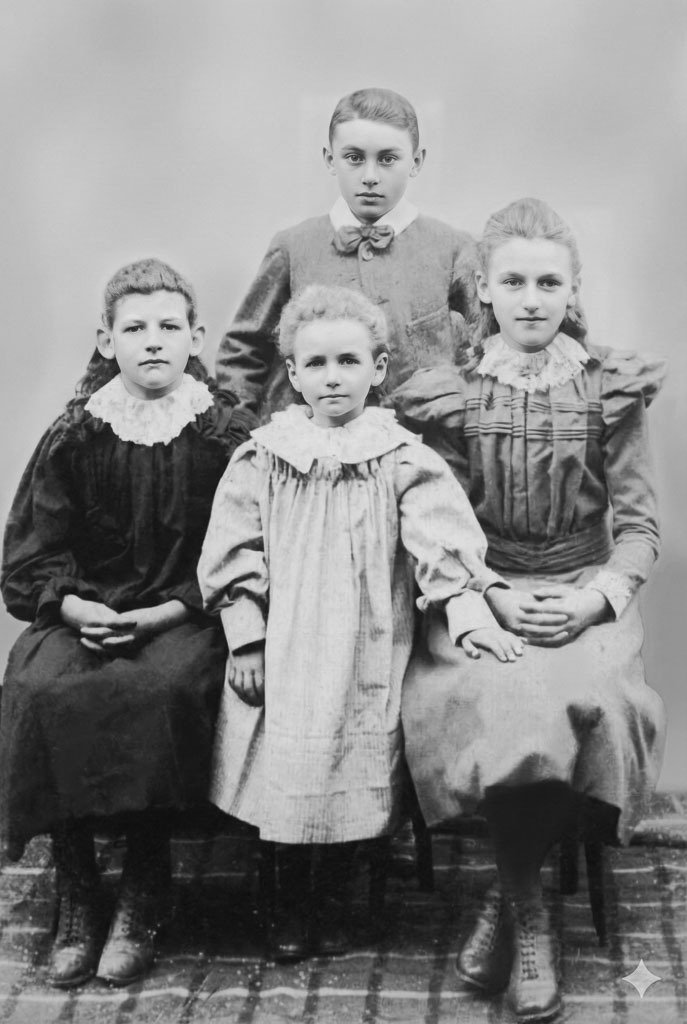
Sarah, two Couling sisters Annie and Emma and cousin Em
Sarah Cloake nee Couling
Early Life in Cornwall
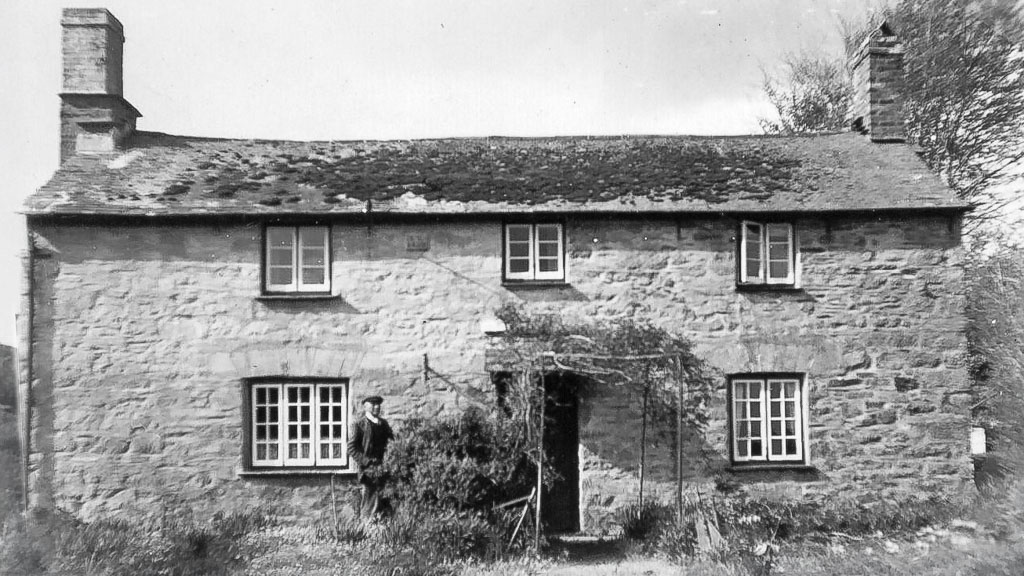
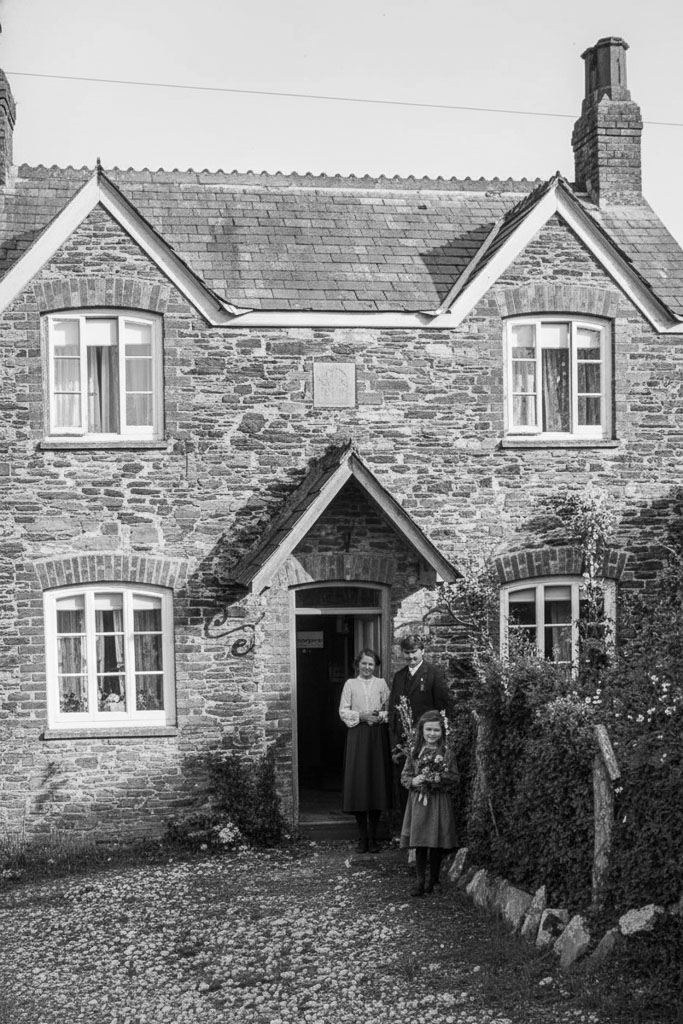
Coulings Cottage at Treverbyn - birth place of Sarah (nee Couling) Cloake
Coulings Cottage
Sarah (1884–1948) was the daughter of William Couling, a labourer and gamekeeper, son of yeoman farmers, and Eliza Southern, whose roots ran deep into the Tamar and Lynher valleys. Born in 1884 at Couling Cottage, Treverbyn—a hamlet near St Neot—her earliest years were woven into the fabric of rural Cornish life, in the very cottage that still bears her family name today.
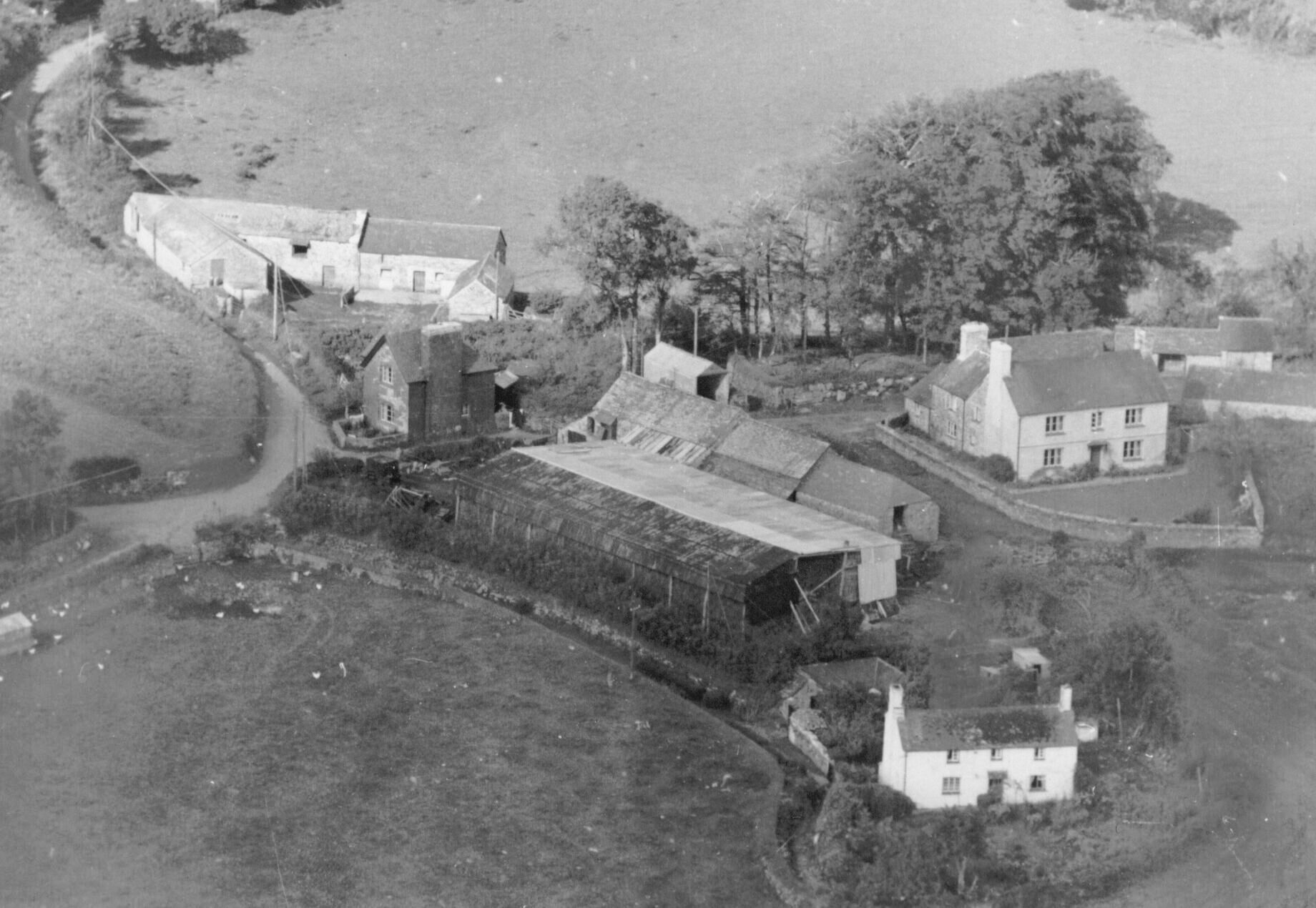
Although Sarah was born at Treverbyn in the parish of St Neot, the emotional centre of her father's family was always Polbathic (sometimes spelt Polbathick) on the St Germans tributary of the tidal River Lynher. The very name is Cornish – often interpreted as “wonderful/marvellous pool” or “boar’s pool” – and the hamlet sits where a once damed narrow creek widens into a sheltered tidal basin. In the nineteenth century it was a compact world of a corn mill, chapel, inn, workshops and small farms strung along the road and up the hillside lanes.
For a child like Sarah, travelling between Treverbyn and Polbathic meant moving between two very different Cornish landscapes: the rougher upland country of St Neot with its granite and moorland, and the softer wooded valleys and salt-smelling creeks of the Lynher. Her father William had been born into this riverside community, and when work or housing drew him to St Neot as a gamekeeper, the family never quite lost sight of the hamlet at the head of the tide where his parents and grandparents had lived.
Family Snapshot - 1891 Census: By the tender age of six, Sarah was living with her uncle James Cowling, a cow and poultry keeper, in the hamlet of Polbathic, in the parish of St Germans. There, she was raised alongside her aunts Annie and Eizabeth Couling. This home became Sarah's childhood residence, maintaining the Couling clan's enduring ties to the land where her father William had been born.
Family Snapshot - 1901 Census: Ten years later, sixteen-year-old Sarah was still living in Uncle James's household at Polbathic with Elizabeth and now James. The census shows her as his niece living there, indicating that she had been raised by her uncle and aunts throughout her formative years. Growing up on this smallholding, Sarah would have learned the practical skills of tending cows and poultry that would serve her well in her future life.
James and sister Aunty Anne Couling - Sarah's Uncle and Aunt
Polbathic in Sarah’s Childhood
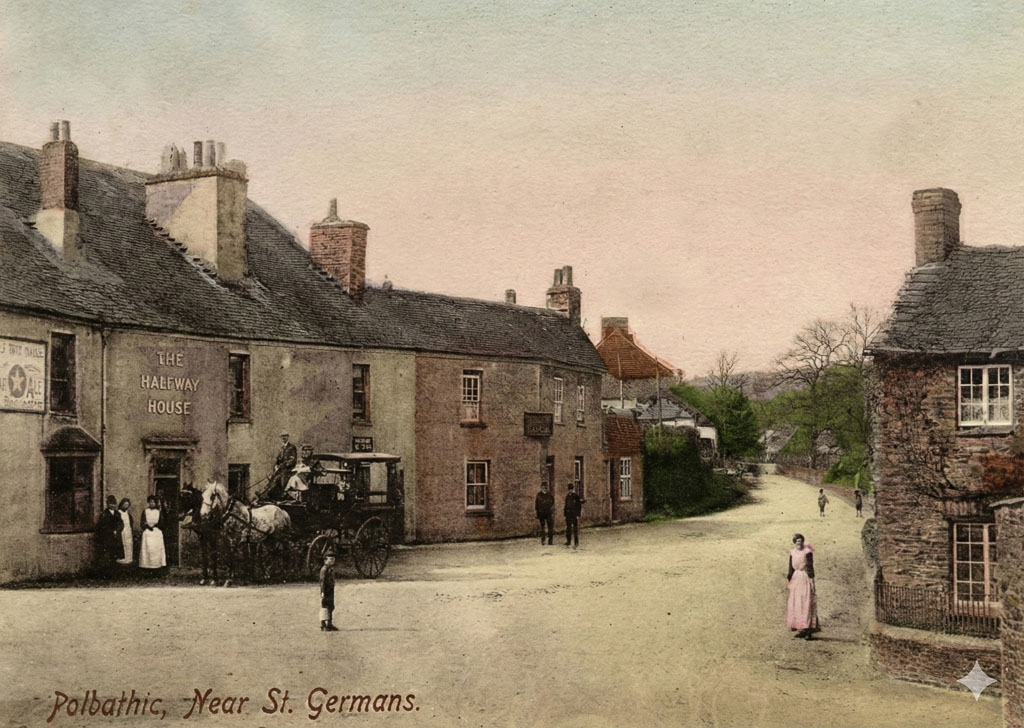
When Sarah arrived as a small girl to live with Uncle James and Aunt Elizabeth, Polbathic was still very much a working rural hamlet. The main road climbed steeply away from the creek, with cottages on terraces such as Sunnyside, small fields and orchards behind them, and paths dropping down to the old corn mill and to the foreshore where boats could be beached at high tide.
At the heart of village life stood the Halfway House public house – so called because it marked a stopping point on the route between Plymouth and the western parts of Cornwall. Earlier Toll and Oliver relatives had kept the inn in the mid-1800s, and stories lingered of formidable landladies and busy evenings when farmers, tradesmen and carters filled the rooms. By Sarah’s day the pub was still a lively place; even if she herself never entered, she would have known the clatter of carts outside, the sound of voices carrying up the hill, and the steady flow of news and gossip that passed through its doors.
A short way up the slope stood the Wesleyan Reform chapel, another focal point in the hamlet. Like so many Cornish communities, Polbathic’s social life revolved not only around the inn but around the chapel’s Sunday services, anniversary teas, Band of Hope meetings, concerts and fundraisers. Sarah's ancestor Coulings and cousin names like the Tolls, Olivers and Samsons all appear in the records and memories associated with the chapel. It is very likely that Sarah’s Cornish childhood included long Sunday walks in best clothes, packed pews, and the sound of familiar hymns echoing off the plaster walls.
Down near the water, the old mill and associated buildings reminded everyone that Polbathic had once been a small industrial as well as agricultural centre. Sarah’s miller grandfather William Couling (1817–1887) and grandmother Emma (née Toll) had lived here before her birth, and older relatives could still point out “Couling’s mill” on the tithe map or in family stories. Even though the mill was past its peak, the idea that her people had once “run the mill” gave the family a quiet sense of rootedness and pride.
The Couling and Southern Heritage
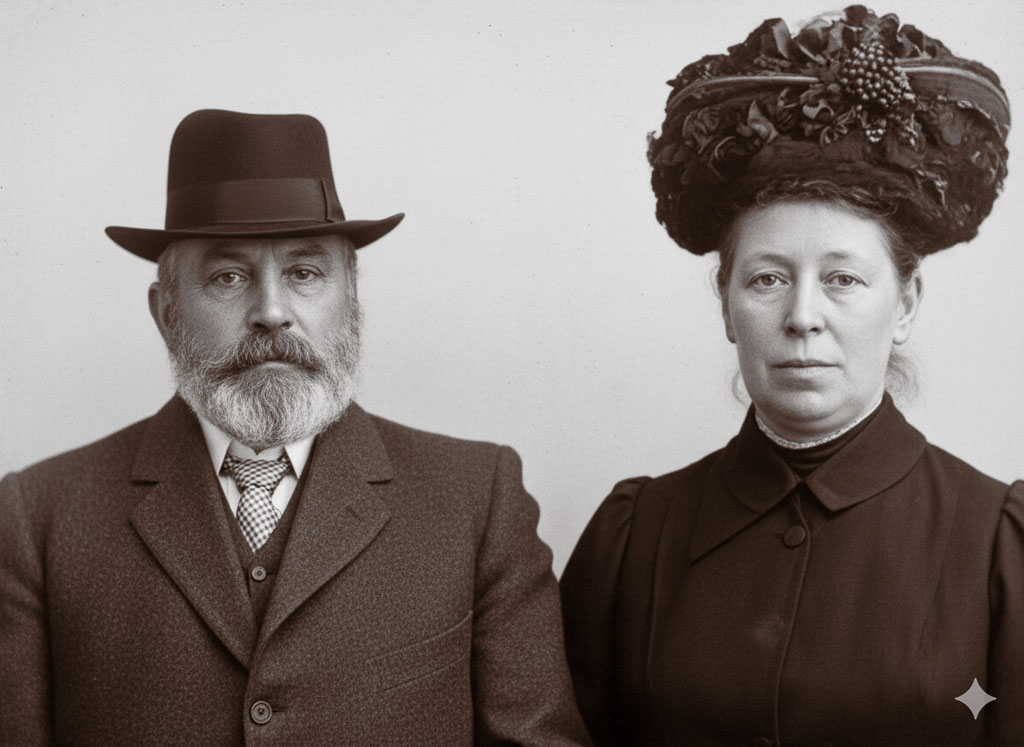
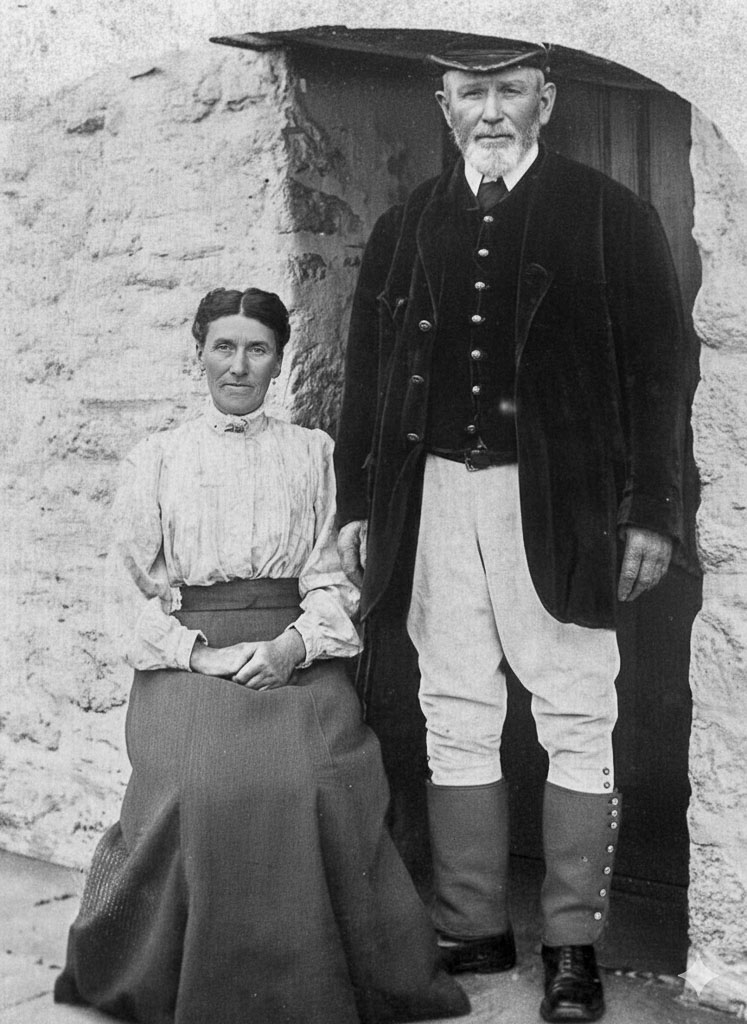
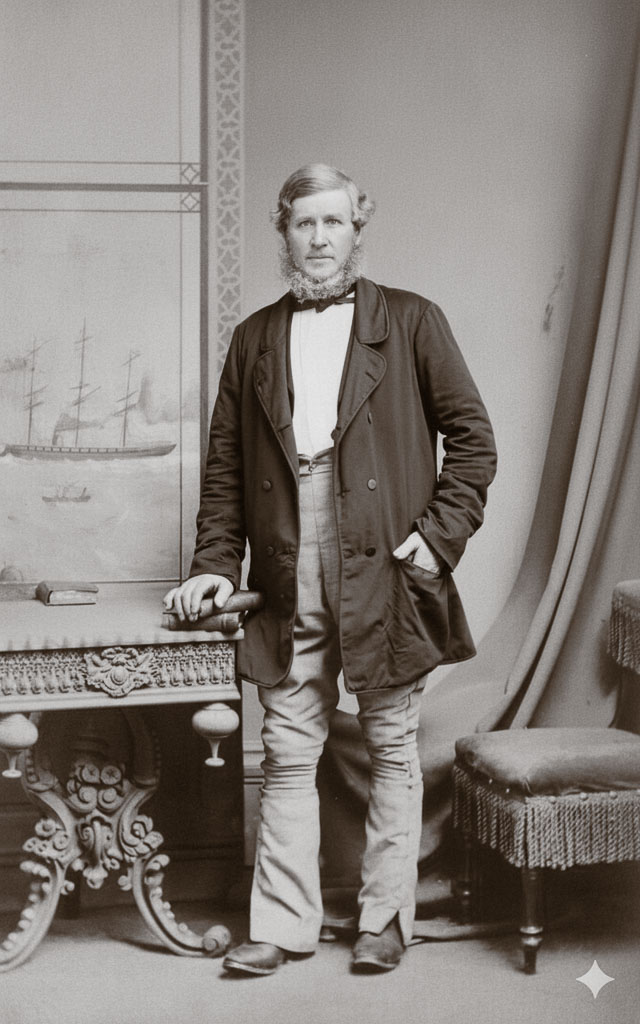
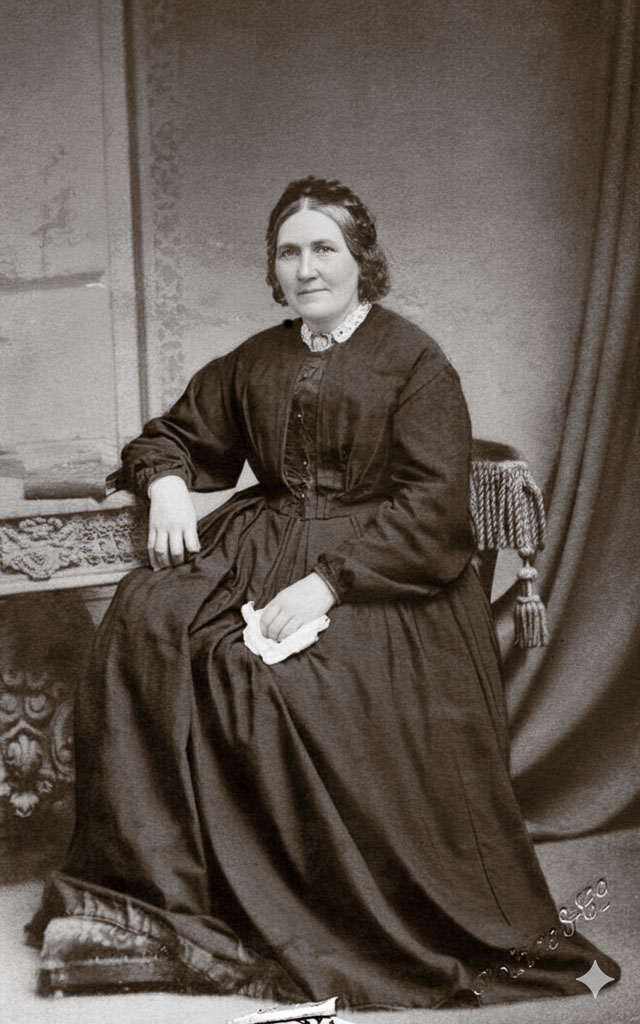
Sarah's parents Eliza (nee Southern) and William Couling
The Couling Family
Sarah's paternal line, the Couling family, traced back through generations of Polbathic farmers, millers and smallholders, intertwined with the Toll family—a lineage of surveyors, sailors, and village characters whose name echoes through parish records and local memories. Her grandfather William Couling (1817–1887), a miller in Polbathic, married Emma Toll (born c.1820 in St Germans), daughter of William Toll (1784–1866) and Elizabeth (née Couling). That marriage knitted together two branches of the same extended clan.
Behind them stood still earlier Couling generations: Daniel Couling / Cowling and his wife Anne (née James), linking the family into established St Germans farming lines such as the James and Hancock families. By the time Sarah was born, the lane to the mill and the cluster of cottages around the Halfway House were full of interrelated kin – Coulings / Cowlings, Tolls, Samsons, Olivers, Roseveares and others – an extended clan who lived, worked and worshipped side-by-side.
The Southern Family
On her mother's side, the Southerns were humble folk of the southeastern parishes, labourers and domestic workers eking out a living under the vast skies near Landrake and Rame. Census records show Southern relatives in service at St Germans and Polbathic even before Eliza’s marriage.
Eliza Southern, born circa 1860–1862, embodied this practicality. She wed William Couling in the early 1880s, likely in St Germans, and together they raised a brood of seven surviving children between St Neot and the Polbathic area, knitting together the Couling, Toll and Southern lines into one extended rural family.
Sarah's grandparents William and Emma (nee Toll) Couling
Sarah's Siblings
Brothers and sisters filled Sarah’s early life at Couling Cottage and later in Polbathic: siblings included William, Emma Jane, James (born 1889), Mary, and younger sister Elizabeth “Leza”, alongside two infants, Annie and George, who sadly died very young.
Sisters Annie and Emma would later follow Sarah across the seas to New Zealand, while brothers like James carried the family's unyielding spirit in Cornwall. The Southerns' story speaks of quiet resilience, with branches venturing to Devon and beyond in search of steadier fortunes.
Polbathic Roots and the Toll Connection
Polbathic, is a small hamlet on the tidal reach of the River Lynher in the parish of St Germans. By the early nineteenth century it was already home to several of Sarah’s ancestral families.
Sarah's great grandfather William 'Old Mr Toll' recieved the land on this corner to establish the Halfway House public house and inn. Robert and Ann (nee Couling) Oliver provided the hospitality from the 1850s.
The Toll family were especially prominent. One branch owned property at the corner where the Halfway House Inn stands, and Toll relatives appear in records as farmers, mariners and strong, larger-than-life characters remembered in local stories. Through her grandmother Emma (née Toll), Sarah was linked directly into this long-established Polbathic clan with many lines reaching back even to 1000 AD.
The Couling and Toll lines intertwined more than once, and by the mid-1800s the lane down to the mill and the cluster of cottages around the inn were full of extended kin living side-by-side. Later village memories recall Bill Couling, born in 1939 at Victoria Cottage, Sunnyside, and his father George working locally and keeping a small holding—evidence that the Couling name remained rooted in the hamlet long after Sarah herself had left for New Zealand.
In 1921, a group of local men, including members of these families, acquired an old army hut and rebuilt it as the Polbathic Recreation Rooms. Under the guidance of Jim Couling (known in the village as a capable organiser), the hut was fitted with electric light and conveniences. For decades it served as a social centre for billiards, concerts, dances, wartime billets and even pantomimes—another reminder that the Couling name was woven deeply into Polbathic’s communal life.
Marriage and New Beginnings
As Sarah blossomed into young adulthood, opportunity beckoned beyond the horizon. In 1911, she exchanged vows with Bertie Thomas Cloake, a fellow Cornishman born around 1885 in Landulph to David Thomas Cloake and Amanda Mary Hocking.
Polbathic may seem remote from Bertie's Bagmill home - 13.5kms by todays roads - but just 5kms by boat making it quite plausable he courted her by steaming along the Lynher waterways. He was sending her postcards there for several years prior to marriage. His father David would certainly have known Polbathic espiecially if shipping limestone from there to Cargreen as a young bargeman.
1884
Birth in Treverbyn
Sarah born at Couling Cottage in St Neot, Cornwall, to William Couling and Eliza Southern.
1891
Living with Uncle James
Six-year-old Sarah living with her Uncle James Cowling and Aunt Elizabeth in Pobathic, near the Tamar River.
1901
Still at Pobathic
Sixteen-year-old Sarah remains in Uncle James's household, having been raised there throughout her childhood.
1911
Marriage in Devonport
Sarah marries Bertie Thomas Cloake in Devonport, Devon. By census time, they're settled at Daison Cottage in Westhill, Torquay.
1912
Birth of Mary
First child, daughter Mary, arrives—a bright-eyed infant who would become the anchor of their bold new chapter.
1913
Emigration to New Zealand
Sarah, Bertie, and baby Mary sail for New Zealand, settling in Springbrook near Timaru, South Canterbury.
1923
Raising Poultry and Building Cloake's Honey
Bertie's beekeeping venture grows from a handful of hives onto a couple of hundred.
1948
Sarah's Passing
Sarah passes away at age 64 in Timaru, Canterbury. She rests in a family grave beside Bertie.
Possibly Sarah and Bertie Cloake with Minnie at Daison Farm
The Journey to New Zealand
The wedding took place in Devonport, Devon, a bustling port alive with the clamor of ships and dreams of distant shores. By the time of the 1911 census, the newlyweds were settled at 1 Daison Cottage in Westhill, Torquay, where Bertie worked as a cow and poultry man on a local farm—skills that echoed the agricultural world Sarah had known growing up in Uncle James's household. Their first child, daughter Mary, arrived in 1912.
The pull of the unknown proved irresistible. In the early 1910s, amid a wave of Cornish emigrants chasing prosperity, Sarah, Bertie, and little Mary set sail for New Zealand.
High Country travellers aking a break at the Tekapo Hotel c1913
They were not alone in their adventure. Bertie's brother Arthur would follow with Alma Chubb to be his bride. Sarah's sisters Annie and Emmy (the latter with husband Bill Harper) joined the exodus, weaving a tight-knit web across the oceans.
The Cloake and Couling families were part of a larger pattern of Cornish emigration to New Zealand. Landing in the sun-drenched plains of South Canterbury on the South Island, they claimed a farmlet in Springbrook, near Timaru—a landscape of golden grasslands that must have felt worlds away from Cornwall's rugged cliffs.
Building a Life in Canterbury
Here, Bertie turned his hands to beekeeping, starting with just a handful of hives. What began as a modest venture blossomed into Cloake's Honey, which son Harry developed into one of the largest apiaries in the South Island, a testament to the Cornish work ethic and resilience that Sarah embodied.
The family developed the Cloake Board, invented by son Harry and grandson Mervyn for efficient queen bee rearing, now used worldwide. They also pioneered a new creamed honey process, which they chose to share freely rather than patent—embodying the Cornish values of community benefit over personal gain.
The Cloake Family in New Zealand
Sarah and Bertie's Children:
The Cloakes raised a lively family in their New Zealand home:
Mary - The firstborn, born in England in 1912, became a Karetane Nurse and Mrs Wilson - See Mary's Story
Harry - Briefly served as a policeman in Greymouth and Timaru before joining the honey trade; breifly attended Timaru Boys High School
Myra - Later became a framers wife at Pareora, Mrs. Rouse
Sarah's is remembered as a loving and jolly grandmother and her home buzzed with the hum of hives and the laughter of children, her steady presence nurturing not just her brood but the innovations that defined their legacy.
Where the Other Families Fit In
When William and Eliza Couling raised their family at Treverbyn and in the Polbathic–St Neot orbit, they set in motion a set of branches that now carry very different surnames like Wedlake, Stephens, Jones, Moon, Kent, Harper and Brabyn grow out of the Couling, some who stayed behind when their sisters left for New Zealand.
James, Annie, Mary & Emma Couling - Sarah's siblings
1. The Couling branch (William Couling)
William Couling (born 1882) married Lousia Beatrice Bardens, with children Mabel Joyce and Geoffrey Couling. No issue was to live in Polbathic as only Geoffrey was to have children in Canada
2. The Harper branch (Emma Jane Couling)
Emma Jane Couling, one of Sarah’s younger sisters, married William John Harper. Their children, Emmie Couling Harper and William “Bill” Couling Harper, carried the Couling middle name into the next generation while using Harper as the family surname. From these two Harper children came a run of grandchildren and great grandchildren
3. The Wedlake & Stephens (James “Jim” Couling)
Sarah’s brother James (“Jim”) Couling married Asta May (Ester) Lobb and moved away to the St Neot Couling Cottage. They had two daughters: Olive Gwendoline (“Gwen”) Couling and Constance Mary (“Connie”) Couling. Through these daughters the Couling line continues under new surnames: grandchildren appear in the records as Wedlake, and Stephens. The next generation introduces more names again.
4. Annie never married in New Zealand
5. The Moon branch (Mary Couling)
One of the most visible “Polbathic” surnames in the Couling tree comes through Sarah’s sister Mary Couling, who married Charles Moon. Their daughter Georgina (“Gina”) Moon is among those recorded in the next generation.
6. The Kent, Brabyn and Scott branches (Elizabeth “Leza” Couling)
Another key married-in name is Kent. Sarah’s youngest sister Elizabeth (“Leza”) Couling married Earnest Edgar Kent. They had two daughters: Dorothy (“Betty”) Kent and Margaret Patricia Kent. The line then steps into yet more surnames including Brabyn and Scott.
Note: For privacy, detailed dates and information about living people have been minimised unles consented. If you are part of one of these families and would like to add more detail, photos or corrections, please get in touch – this story is very much a work in progress.
Later Polbathic Memories from Cousin Bill
Long after Sarah had sailed for New Zealand, Couling cousins still kept the family name alive in Polbathic. One of them, Bill Couling, born in 1939, grew up at Victoria Cottage, No. 2 Sunnyside – a short walk from the Halfway House and within sight of the creek. His memories give us a flavour of the village that Sarah’s brothers and cousins knew.
Bill remembered an air-raid shelter dug into the bank opposite their house during the Second World War, and bonfires on the recreation field where local children roasted potatoes and watched the sparks fly up into the dark. He went to school in nearby St Germans, travelling by taxi to Landrake for woodwork classes, and recalled that almost every family had someone who worked at Brenton’s ironworks down by the river. The works had its own football team and sports pitch; the factory hooter marked the start and end of shifts, and on winter evenings the glow from the yard lights shone out across the creek.
In Bill’s stories, familiar names recur: Couling, Oliver, Samson, Roseveare. There was Albert’s butcher’s shop near the chapel, smallholdings with a few cows and pigs, and neighbours who could trace how each family was related “by marriage or by chapel”. It is easy to imagine that if Sarah had been able to return in later life, she would still have recognised the pattern of lanes and houses, the rhythms of work and worship, and the sense that Polbathic was not just a dot on the map but a tightly knit web of kin.
Legacy and Remembrance
Sarah's journey drew to a gentle close in 1948, at the age of 64, in Timaru, Canterbury. She rests eternally in a family grave beside Bertie, a site still visited by descendants who trace their roots back to that Cornish girl from Treverbyn.
Her story endures through vintage tins of Cloake's Honey, family reunions that bridge the Couling and Cloake lines, and the quiet pride of a woman who crossed empires to build a sweeter world.
In Sarah, we see the pioneer: resilient, loving, and forever tied to the land—whether the cottage at Treverbyn where she was born, the smallholding at Polbathic where Uncle James raised her, or the fields of Springbrook where she built her New Zealand legacy.
For the Cloakes and Couling kin scattered from Treverbyn and Pobathic to Aotearoa, Sarah remains our guiding light, a reminder that from humble hollows come the sweetest legacies.
This story is dedicated to all descendants of Sarah Couling and Bertie Cloake, whose journey from Cornwall to Canterbury exemplifies the courage and determination of the Cornish diaspora.
Old Families, New Generations: Remaining Descendants in Polbathic
Polbathic may be a small hamlet, but it still carries the names and bloodlines of families who have lived here since the 1800s. This page sketches how some of those early households are still represented in and around the village today.
Polbathic in brief
Polbathic (Polbathick / Pollbarthek) sits at the head of the tidal River Lynher. In the 19th and early 20th centuries it was a busy little place of mills, lime kilns, farms, Brenton’s East Cornwall Iron Works, Oliver’s grain and feed stores, the Halfway House, a chapel and a recreation room. Many families put down deep roots here and several still have descendants living locally today. :contentReference[oaicite:0]{index=0}
The Couling family
The Couling (often also written Cowling) family can be traced in Polbathic back to at least the early 19th century. Census returns show Couling households in the village by the 1840s, with occupations such as labourer, blacksmith, gamekeeper and dairying. :contentReference[oaicite:1]{index=1}
In living memory, the Cowlings/Coulings are closely associated with Sunnyside (Victoria Cottage and neighbouring houses). Bill Couling (b. 1939) recalled growing up at Victoria Cottage with his two sisters. His grandfather had been gamekeeper to Squire Littleton and his father George worked for Brenton’s foundry and later drove lorries for Fosters. His mother Victoria kept cows and a pig in what is now New Haven next door – the cows were still walked safely along the lane to graze.
Earlier generations of Coulings appear scattered through village life: one branch living “in Back Lane” (now Sunnyside), another running a small dairy where villagers collected milk and scalded cream in their own pans from Bessie Oliver’s slab-topped dairy.
Today, descendants of these Couling lines are still present in the wider Polbathic / St Germans area, maintaining a continuous thread from the early 1800s right through to the present day.
The Oliver, Toll & Samson families
The Oliver family arrived in Polbathic in the mid-19th century with Robert Oliver, a corn and coal merchant who took over the Halfway House after marrying Ann Toll. Their nephew, also Robert, later recalled the pub and store as a busy centre where farmers and tradesmen used the top room and working men crowded the kitchen – and where drunkenness and fighting were “very prevalent”.
The Olivers went on to run major grain and feed stores on the quay at Polbathic, with depots as far afield as Liskeard, Hessenford, Plymouth Corn Market and a coal store at Wacker Quay. The business passed from Robert to his son Horace Oliver and remained in family hands until it was sold to Cornwall Farmers in 1965.
The Toll family were significant landowners and innkeepers – early deeds show William Toll receiving land on the corner where the Halfway House stands. Later recollections talk about “old Mr Toll” in the big house up Mill Lane (now Sunnyside) with Mrs Samson, and another Toll relation (Mrs E. Couling) living nearby.
Although the Oliver and Toll businesses have long since passed into other hands, their surnames still echo through local memories – and Toll/Couling intermarriages mean that many current “village families” carry both lines further down their trees.
Later arrivals with deep roots: Halliday, Tamblyn & more
Not all of Polbathic’s long-rooted families go back to the early 1800s. Some, like the Hallidays and Tamblyns, arrived later but are now woven into the village story. Eunice Halliday’s 2025 account of Polbathic draws heavily on memories and photographs preserved by Bill Couling, Janet Hummerstone (née Couling) and Vanda Tamblyn, underlining how these families form a living bridge between the present and the “old Polbathic” of works sirens, chapel anniversaries, whist drives and sports days.
The Halfway House continues as a genuine community pub; in recent years landlords like the Halliday family have helped keep it at the heart of village life, from live music to charity collections when neighbours are in need.
Taken together, these later-arriving families are part of the “remaining descendants” story too: they carry on the chapel traditions in new forms, run local choirs and drama groups, sit on the village hall committee and keep local oral history alive.
The Brenton & Bersey significance
The name Brenton is tied to Polbathic through William Brenton (1831–1911), the inventor and entrepreneur behind the East Cornwall Iron Works. From modest beginnings, he built an engineering firm that employed dozens of local men and took out 29 patents, including the famous “Brenton Bolt” fastener used across Britain and exported overseas.
William and his wife Selina (née Parker) raised their family in the Sheviock side of Polbathic, in a house known locally as West Park. Their descendants spread into related local families – notably the Berseys. Grandson Albert Bersey, one of William’s grandchildren, later owned the recreation field on the south side of the village. For many years this field was used for fetes, sports days, carnivals and bonfires, and is remembered as the sports ground for Brenton’s own works football team.
While the Iron Works finally closed in 1979 and its site is now being redeveloped, Brenton and Bersey descendants are still in the district and their stories are part of how the village remembers its industrial past.
Polbathic families today
For privacy reasons this page doesn’t list living people by name or address, but many of the surnames familiar in 19th- and early 20th-century sources – can still be found in and around Polbathic, St Germans and the Lynher valley.
The “remaining descendants” are the grandchildren, great-grandchildren and great-great-grandchildren of farm labourers, blacksmiths, chapel stewards, ironworkers, barge hands, publicans and small traders. Their stories are still unfolding in the same lanes, fields and houses their ancestors knew.
Sources & further research
This page is based on village memories and local-history work including:
Patricia Giles, “Polbathic Recreation Rooms 1921–1981” in The Local Historian, February 1985
Eunice Halliday, Polbathic (Spring 2025), with contributions from Bill Couling, Janet Hummerstone and Vanda Tamblyn.
19th- and early 20th-century census returns, tithe apportionments and trade directories for St Germans and Sheviock parishes.